London Cancer District
welcomes Kingston University

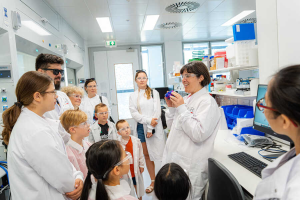
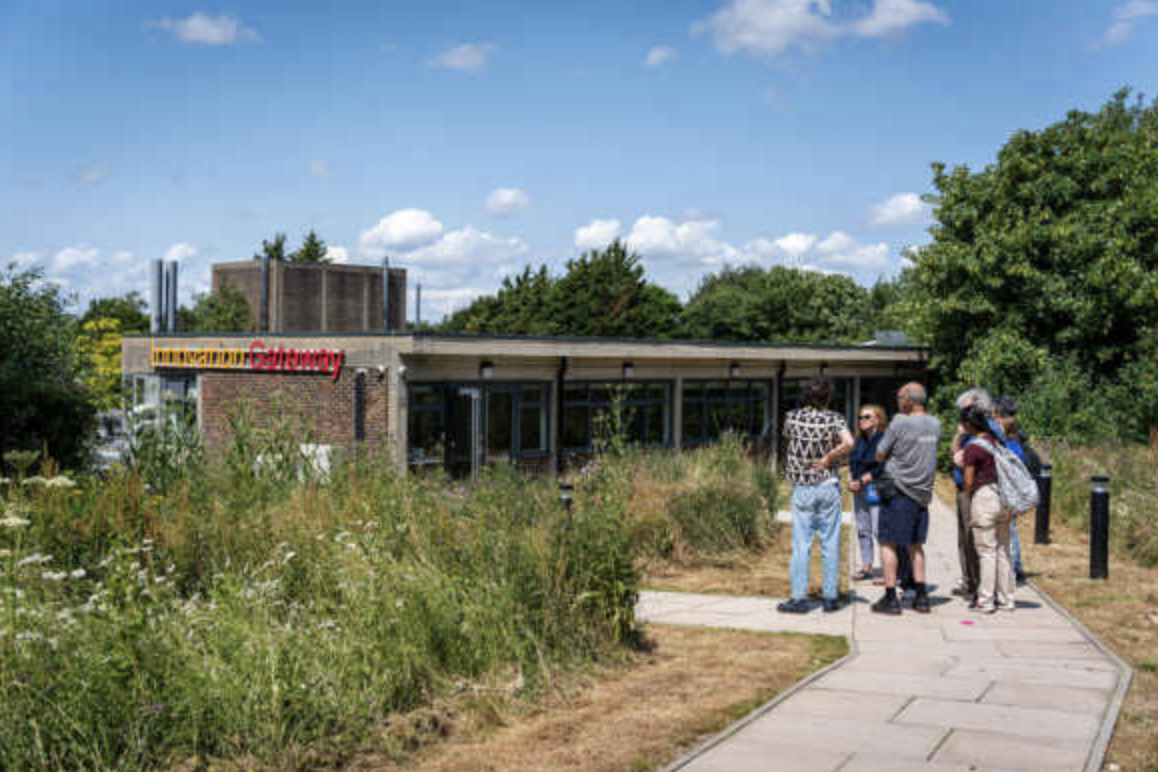
From August, academics from Kingston University’s School of Life Sciences, Pharmacy and Chemistry and the School of Nursing, Allied and Public Health will be based at the Innovation Gateway at The London Cancer District.

The Innovation Gateway is bringing together researchers, clinicians, entrepreneurs and businesses as part of an emerging global centre for cancer research, treatment and commercial innovation, anchored by The Institute of Cancer Research, London, and The Royal Marsden NHS Foundation Trust.

The move gives Kingston researchers, based in the University’s Health, Education and Society Knowledge Exchange and Research Institute (HES KERI), direct access to one of Europe’s leading concentrations of cancer expertise, creating new opportunities for collaboration, knowledge exchange and the translation of research into clinical and commercial applications.

They will work alongside researchers at The Institute of Cancer Research (ICR),
The Royal Marsden NHS Foundation Trust and a growing cluster of life sciences companies.

The team’s expertise spans biomolecular and translational oncology, advanced research methods and technologies, and improving cancer outcomes through research into inequalities, implementation and supportive care.

Kingston University has already been collaborating for several years with teams at The Institute of Cancer Research and The Royal Marsden’s Oak Drug Development Unit to give placements to Kingston students who are studying for a qualification in clinical trial management.

Kingston University’s team includes senior figures Professor Helmout Modjtahedi, Dr Hossein Ashrafi, Dr Ahmed Elbediwy, Dr Athina Myrto Chioni and Professor Shereen El-Nabhani.

Director of Kingston University’s HES KERI Professor Adam Le Gresley said the collaboration will be vital to helping tackle cancer.

“Joining the London Cancer Hub community puts our researchers side-by-side with world-leading institutions and industry partners. It’s a fantastic opportunity to translate our science — from precision oncology to tackling cancer inequalities — into real impact for patients.”

Dr Jon Wilkinson, Director of Business and Innovation at The Institute of Cancer Research, London, said:

“We’re very pleased to see Kingston University joining the ecosystem at the Innovation Gateway, which is right next door to our own buildings in Sutton including our flagship Centre for Drug Discovery.”

“We are looking forward to collaborating further with partners like Kingston at The London Cancer Hub – a project we have long championed as a route to translate our discoveries into patient benefit, by even further enhancing our work with industry and other partners.”

Olaide Oboh, Managing Director at Populate, said:

“The Innovation Gateway was created to bring together the different disciplines
needed to accelerate innovation, researchers, clinicians, entrepreneurs and businesses working side by side. Kingston University’s arrival strengthens that ecosystem and demonstrates the growing appeal of the London Cancer Hub as a place where collaboration can translate research into real-world impact.”

London Cancer District Fund launches to support Sutton’s community organisations

A new community fund has launched to support charities and grassroots organisations across Sutton, helping ensure local people benefit from the continued growth of the London Cancer District.

The London Cancer District Fund will provide match funding of up to £5,000 per project to not-for-profit organisations based in, or supporting people in, the London Borough of Sutton.

The fund forms part of Aviva Capital Partners and Socius’s commitment to expanding the London Cancer District – which recently received planning consent for its next phase of growth.

Supporting the community alongside world-leading science

As the District continues to evolve, the aim is simple: deliver meaningful benefits for local people alongside world-class research and innovation.

Delivered through Crowdfunder and primarily funded by Aviva – with additional contributions from members of the wider London Cancer District professional team – the fund will support projects that:

  • Improve health and wellbeing
  • Strengthen community connections and local spaces
  • Create opportunities for young people
  • Inspire interest in science, discovery and innovation


👉 Find out more and apply via Crowdfunder:

https://www.crowdfunder.co.uk/funds/london-cancer-hub

Backing the organisations that make Sutton thrive

The London Cancer District is already one of the UK’s most important centres for cancer research. As investment continues, the Fund is designed to ensure the benefits are shared locally and support the charities and community groups that make a difference every day.

Projects will be selected following an application and assessment process via Crowdfunder, with funding awarded in the coming months.

Alongside this initiative, Community Action Sutton is preparing to launch a separate Healthy Lifestyle Fund in early March, funded by Sutton Council, offering further opportunities for local organisations.

Lunch & Learn with Professor Paul Workman OBE – 24 March

The London Cancer District is pleased to welcome Professor Paul Workman OBE, internationally recognised leader in Cancer Therapeutics and former CEO of The Institute of Cancer Research (ICR), for a special Lunch & Learn session on Tuesday 24 March.

Taking place at the Visitors Suite, Innovation Gateway, this event will offer attendees the chance to hear directly from one of the UK’s most influential voices in cancer research and drug discovery. Professor Workman will share insights into the evolving world of cancer therapeutics, the pioneering work taking place at the Institute of Cancer Research, and the vital role that research and innovation plays in shaping the future of the London Cancer District.

The session is open to Innovation Gateway tenants and the wider London Cancer District community, and will provide an informal opportunity to connect with others working across the ecosystem.

Lunch will be provided – curiosity encouraged.

Event details

📅 Tuesday 24 March
🕛 12:00 – 13:00
📍 Visitors Suite, Innovation Gateway

Spaces are limited and early registration is encouraged.

👉 Register via Eventbrite here.

Planning approval secured for London Cancer District

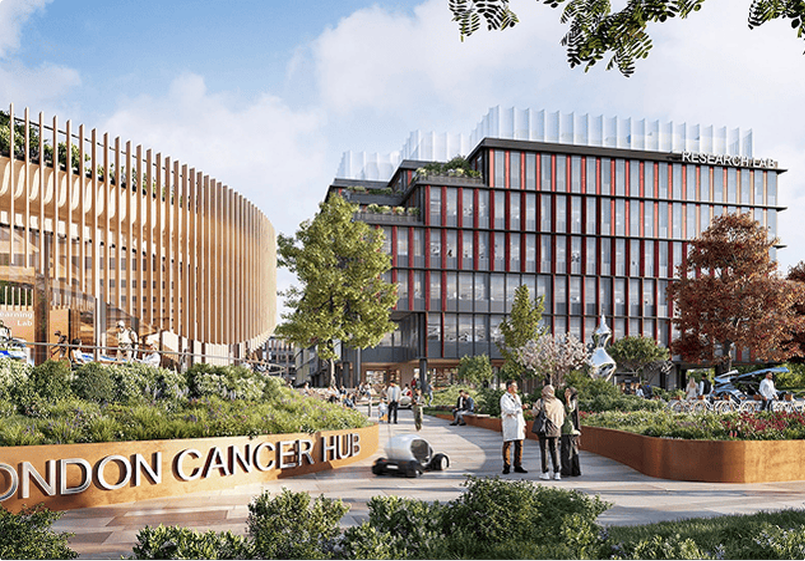
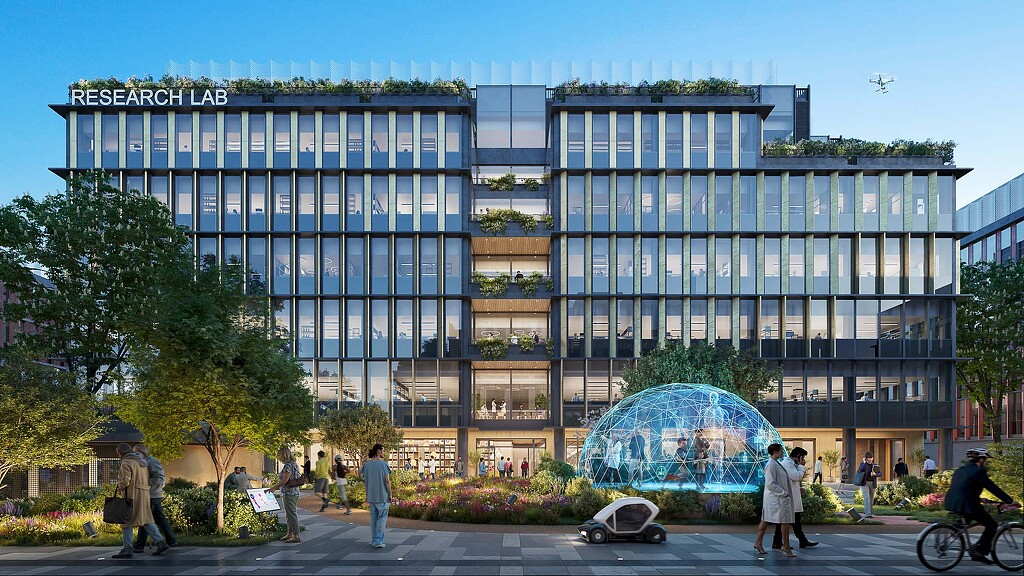
Plans for the £1 billion expansion of London Cancer District, led by Aviva Capital Partners and development manager Socius, have received consent from Sutton Council. The approved scheme will deliver around 1 million sq ft of state-of-the-art laboratory and research space, unlocking the next phase of growth at the London Cancer District and strengthening the UK’s science and innovation infrastructure.

Planning approval was granted on World Cancer Day (4 February), underlining the urgency of advancing cancer research and treatment. The development will play a vital role in helping the UK tackle future health challenges by providing critical science infrastructure that supports innovation, attracts investment, and accelerates life-saving discoveries.

The approved plans will deliver new laboratory and research space across 12 acres, strengthening the London Cancer Districts’s wider innovation facilities and supporting collaboration between researchers, clinicians, start-ups, scale-ups and global life sciences companies to drive scientific breakthroughs and support emerging businesses.

It is expected to create 3,000 new jobs, the majority in high-skilled R&D and life sciences-related manufacturing. The expansion forms part of the wider London Cancer District and, once the full district is realised, is expected to support around 13,000 jobs in total and contribute an estimated £1.2 billion in Gross Value Added (GVA) to the UK economy, according to analysis by the London Borough of Sutton.[1]

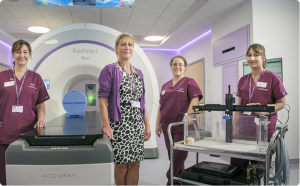
The wider London Cancer District is already home to internationally renowned institutions including The Institute of Cancer Research and The Royal Marsden NHS Foundation Trust, alongside the Innovation Gateway, which supports early-stage life sciences companies. Together, these assets form a globally recognised cluster for cancer research, treatment and commercialisation, helping translate scientific discovery into clinical impact.

Designed to the highest environmental standards, the new buildings will target net-zero carbon in operation and deliver the amenities and public realm expected of a world-leading employment district, including affordable homes for approximately 220 key workers and new public spaces designed to support wellbeing, collaboration and community.

The London Cancer District is recognised as nationally significant science infrastructure, aligned with government ambitions to position the UK as a global leader in life sciences and health innovation. Recognised in the Mayor of London’s Growth Plan as a key engine for frontier innovation, the project will deliver significant economic benefits, creating high-skilled jobs and drawing international investment into the UK’s life sciences sector. The project, designed by Gensler, won the New London Architecture Award 2025 for Healthcare and Life Sciences, recognised for its transformative mixed-use masterplan creating a vibrant, science-led district in Sutton, blending world-class research, labs and community spaces.

Sophie White, Sector Head Regeneration at Aviva Capital Partners, said:

“We’re delighted to secure planning consent for the London Cancer District – a landmark moment for this scheme. This development will deliver critical science infrastructure for the UK, helping the UK get ready by creating an environment where innovation can flourish and lifesaving research can accelerate. We are proud to play a role in shaping a campus that will have a profound impact on global health, as well as the economy.”

Daniel May, Director of Socius, said:

“The London Cancer District is about more than buildings. We are delivering the next phase of investment into an already world-class cancer district, creating a powerful catalyst for private investment and long-term growth. It’s about creating a vibrant ecosystem where collaboration drives discovery. By working closely with The Institute of Cancer Research, The Royal Marsden, and our partners, we are delivering a world class environment that will support businesses, attract investment, and ultimately improve patient outcomes.”

Professor Kristian Helin, Chief Executive of The Institute of Cancer Research (ICR), said:

“We warmly welcome the approval of these ambitious new plans for The London Cancer District, a project the ICR has long championed. Their delivery will create a vibrant, globally competitive life-sciences facility at our Sutton campus, attracting innovative companies and deepening collaboration between academia, industry and the NHS. This environment will further strengthen our world-leading research and help us attract the very best scientists and students from around the world.

“Overall, these plans will accelerate the translation of pioneering discoveries into patient benefit and establish The London Cancer District as a nationally and internationally significant centre for cancer innovation – driving investment, enabling the growth of oncology-focused life-sciences companies, and reinforcing the UK’s position as a global leader in cancer research and life-sciences.”

Dame Cally Palmer, Chief Executive of The Royal Marsden NHS Foundation Trust, said:

“We are delighted that planning permission has been granted for the London Cancer District.

“A world leading partnership already exists between The Royal Marsden and the Institute of Cancer Research in improving cancer survival globally through research and innovation in cancer care.

“Partnering with life sciences and Aviva through the London Cancer District will have a major impact and benefit for the local community, the country, and for our international collaborations in cancer research. We are thrilled that planning permission has been granted.”

Councillor Barry Lewis, Leader of the London Borough of Sutton, said:

“This is a hugely significant moment for Sutton, London, and the UK life-science sector. The approval for the next stage of the London Cancer District cements Sutton as a leading global destination for cancer drug discovery.

“This landmark development will deliver economic growth, significant health innovations, and tangible benefits for our community, including jobs. I’m immensely proud of the Council’s work in acquiring the land, securing grant funding, and finding partners in Aviva and Socius to deliver this project. Now I look forward to seeing the construction get underway!”

Howard Dawber, Deputy Mayor of Business and Growth, Greater London Authority, said:

“I am thrilled that planning consent has been granted to expand the London Cancer District, enabling the development of this world-leading facility. I have seen first-hand the incredible work that the District delivers, and this expansion will create thousands of jobs, support emerging businesses and attract investment, while driving life-saving scientific research. It will further cement London as a global leader in health and innovation as we continue to build a better, more prosperous capital for everyone.”

ACP and Socius are working with Gensler (architects), Arup (structural engineers) and Savills (planning consultancy) to deliver the development.

[1] The London Cancer Hub – sutton.gov.uk

Congratulations to Kindling Bio – Hack4Hope 1st Prize Winners!

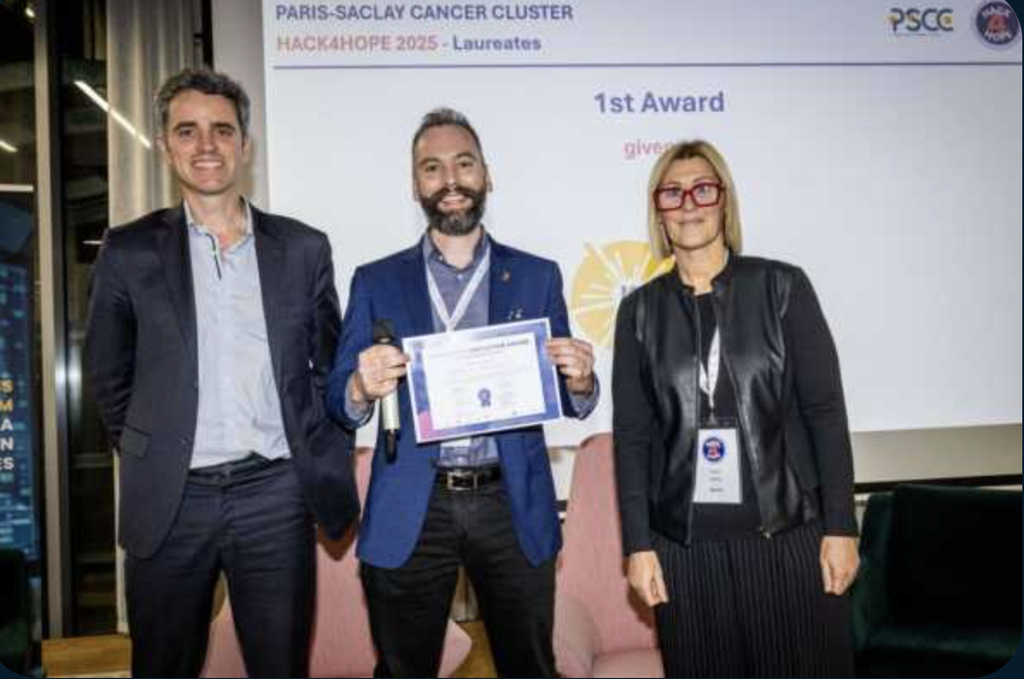
We are thrilled to celebrate Kindling Bio, one of our fantastic tenants at the Innovation Gateway, for being awarded 1st Prize at Hack4Hope 2025, hosted by the Paris‑Saclay Cancer Cluster (PSCC) in Paris! 🎉

Hack4Hope is an international challenge bringing together innovators, researchers, clinicians, and patient advocates to accelerate breakthroughs in childhood cancer research. Kindling Bio stood out from a competitive field of nine finalists, winning first place, prize funding, and strategic support from PSCC – a testament to their innovative work in gene therapy for paediatric cancers.

Dr. Aleck Jones, Co‑founder and CEO of Kindling Bio said “This recognition from Hack4Hope and the Paris‑Saclay Cancer Cluster is hugely meaningful for us as a young company. Engaging with clinicians, patient advocates, and experts across paediatric oncology has strengthened our thinking and sharpened our path forward.” 

We’re incredibly proud to have Kindling Bio as part of our Innovation Gateway community. Their dedication, creativity, and impact-driven approach are exactly what makes our hub such an exciting place for science and innovation.

Well done, Kindling Bio! We look forward to seeing your continued success as you advance new therapies that could change the lives of children with cancer.

ExoNostic joins the Innovation Gateway at the London Cancer District

We are pleased to welcome ExoNostic to the Innovation Gateway, strengthening our growing community of pioneering life-science companies at the London Cancer District.

ExoNostic is developing next-generation liquid biopsy diagnostics that enable earlier and more accessible disease detection. Their platform applies holistic molecular analysis to small biological samples, generating detailed diagnostic insights that support early cancer detection, treatment monitoring and wider biomarker discovery.

By joining the Innovation Gateway, ExoNostic will benefit from state-of-the-art laboratory and office facilities, as well as opportunities to collaborate with world-leading scientists and clinicians across The Institute of Cancer Research.

Space remains available for organisations looking to accelerate innovation in oncology and related fields.

Growth continues at the London Cancer District with new oncology tenants

Aviva Capital Partners (“ACP”), Aviva’s in-house capital unit that invests in regeneration and infrastructure, and place-management specialist Populate have secured two new oncology companies as tenants at the Innovation Gateway, a leading life sciences incubator at the heart of the London Cancer District.

Kindling Bio, a start-up focused on developing cancer gene therapies for children, and Beckman Coulter, a leading developer of cancer diagnostics, will base research teams at the Innovation Gateway occupying self-contained lab spaces on a flexible basis. They will join other fast-growing companies including CuResponse, a pioneer in personalised cancer treatments and Vesynta, a spin-out from UCL focused on data-guided precision treatment dosing. The incubator, which provides 3,500 sqft of lab space over two floors, is now at 85% capacity.

Opened in in 2021 by Sutton Council, the Innovation Gateway provides flexible lab space for fast-growing companies adjacent to the world-renowned Institute of Cancer Research and The Royal Marsden NHS Trust’s Sutton hospital which has the UK’s largest portfolio of cancer clinical trials. ACP has taken on the management of the Innovation Gateway and appointed Populate to oversee the delivery of enhanced facilities including new meeting spaces and a marketing suite.

It forms part of the London Cancer District where plans have been submitted by ACP and Socius for a c. 1 million sqft development of lab and R&D facilities that will enable life sciences companies to work alongside and collaborate with some of the world’s leading cancer researchers and clinicians.

Works are already underway to enhance the existing infrastructure and public realm. A new pocket park has been introduced to provide a green space for staff, patients and visitors to relax and four padel courts, operated by Social Sports Society, are being installed as part of a wellbeing-focused amenity offer to help attract and retain leading companies and talent.

Sophie White, Head of Regeneration at Aviva Capital Partners said: “The Innovation Gateway, which provides space for fast-growing oncology companies to collaborate and grow, is a microcosm of what can be achieved at scale at the London Cancer District. Our vision is to help the UK get ready for the future by delivering best-in-class lab and R&D space of all sizes that will enable life sciences companies to work closely with The Institute of Cancer Research and The Royal Marsden NHS Foundational Trust, and unlock further innovation in cancer treatment.”

Olaide Oboh, Managing Director, Populate added: “The Innovation Gateway is at the heart of the ecosystem at the London Cancer District and we are proud to be working with Aviva Capital Partners to provide a launchpad for fast-growing businesses in the oncology space. The workspace is vital but we are equally focused on the spaces between the buildings, and how we can create a more connected and inclusive district where people want to work, meet, socialise and share ideas.”

Jeff Drew, Co-Founder at Kindling Bio, said: “The Innovation Gateway provides the perfect environment for us to advance our research programme, offering flexible and affordable lab space as well as the opportunity to access specialist equipment and collaborate with researchers and clinicians at The Institute of Cancer Research and The Royal Marsden. We are excited to be part of a dynamic and growing research cluster at the London Cancer District.”

London Cancer District serves up social impact with Sutton’s first padel courts

Bookings are now open for Sutton’s first-ever padel courts, which will bring lasting benefits to the local area through local job creation, free charity access, discounted resident sessions and youth play programmes.

With construction nearing completion, the new four-court facility, which will launch in October, will be operated by Social Sports Society. The courts will transform a previously unused corner of the London Cancer District site into a vibrant destination for sport and wellbeing.

Working in partnership with Aviva, Socius and Populate, the courts activate unused space within the District and form part of the wider £1 billion vision to create a world-leading district for cancer research in the heart of Sutton.

The plan for the courts, which received planning approval from Sutton Council earlier in the year, was shaped by feedback from more than 4,500 residents, gathered through extensive community engagement. Led by Meeting Place, the public consultations revealed a strong appetite for accessible health and leisure amenities, a demand which this new facility seeks to address.

Joss Taylor is Head of Activation at Populate, a company which helps investors to maximise the potential and social value from their buildings and spaces.

Commenting on the padel courts, Joss said: “Public feedback has been at the heart of shaping this initiative and these new courts directly respond to calls for more on-site amenities.

“The facility will bring a wide range of health benefits and youth coaching opportunities for people from across Sutton and beyond, all within a space that had previously been unused.”

Discounted court rates will be offered for London Cancer District staff and those living close to the site. In addition, a total of 40 hours of free court time will be guaranteed each week for local students and charitable organisations, of which, 10 hours will be provided for Harris Academy students to use.

Joe Cutress, Director of Sport at Harris Academy Sutton, said: “We’re just as excited as the students to get out on the new courts and play padel, which will be a fantastic addition to our sports provision. Compared to other PE Departments in the Borough, we’ve pulled the short straw with no green space, so we’re always looking for new and engaging ways to inspire students to be active. Padel fits the bill perfectly. Having played, I’m not surprised by its growing popularity.

“To have this built on the doorstep is a fantastic opportunity for our students, who can’t wait to take advantage of our dedicated hours and would love the opportunity to use the courts more frequently. We’re proud to be part of a project that enhances sporting opportunities and supports the health and wellbeing of our children and the local community.”

Keith Kehoe has been appointed as the facility’s General Manager and will oversee its day-to-day operations. He commented: “The facility offers a fun, inclusive way for residents and visitors to stay active and connected. Whether players are receiving treatment at London Cancer District or studying and working here, we really want these courts to become a welcoming hub where people can get together whilst improving their health and wellbeing.”

The courts are now open for bookings, with play available from 1 October 2025. Residents with proof of a local postcode, alongside London Cancer District staff and patients, are eligible for discounted rates, which can be accessed via the online booking portal

Budding players are now able to book a court and coaching by downloading the Playtomic booking app and using the club search function to select ‘S3 Padel Sutton’: https://app.playtomic.com/?utm_source=web-2025

To learn more about the discount available to staff, patients and residents, please email: keith@socialsportssociety.com

The temporary facility, which will be in place for up to seven years, is designed to evolve alongside the wider, long-term development of the London Cancer District and is built from sustainable materials, including reclaimed wood.

Sophie White, Sector Head for Regeneration at Aviva Capital Partners, said: “We’re focused on investing to grow the economy, drive regeneration and support the creation of jobs and homes across the UK – objectives which align closely with our investment in Sutton. The new padel facility is an early example of how the London Cancer District will deliver lasting benefits to the local community.”

From structures to science: a month-long celebration of architecture at the London Cancer District

London Festival of Architecture explores how science, community and placemaking are coming together to build a world-class cancer district in Sutton.

The London Cancer District has rounded off a month of celebrations as part of the London Festival of Architecture (LFA) 2025, marking a milestone for Sutton’s growing life sciences cluster.

Throughout June, the festival’s theme of “Voices” was brought to life through a packed programme of creative, scientific and community-led events.

Nearly 300 people from across the country took part, including residents, school groups, researchers and community leaders, offering attendees a glimpse into the future of what will become a world leading cancer innovation district.

Delivered in partnership with Aviva Capital Partners, Socius, Populate, Sutton Council and institutions across the London Cancer District, the festival programme opened up the campus like never before.

Attendees were given behind-the-scenes access to the London Cancer District, which is already home to The Institute of Cancer Research, The Royal Marsden NHS Foundation Trust, Harris Academy and Maggie’s.

With a £1bn transformation led by Aviva Capital Partners and Socius currently in planning, the events gave visitors a sense of what’s to come, ranging from world-class laboratories and public spaces to pioneering architectural design and community-led placemaking.

Feedback from festival goers was overwhelmingly positive, 100% of survey respondents rated the events favourably and more than 70% said they wanted to stay informed as the District progresses.

Several attendees were surprised by how much was already happening behind the scenes and described their experience of the festival as “inspiring” and “informative”. “I thought I knew the campus,” one visitor remarked, “but I had no idea the vision was this ambitious… or this ‘real’.”

From guided walks and flash-mob dances to architectural talks and science experiments, the festival events offered a chance to connect with developers, researchers, architects, students and local leaders.

Throughout the month-long festival, visitors explored the London Cancer District through:

  • Guided walking tours highlighting the plans for London Cancer Hub’s world-leading architecture, active labs and new public spaces
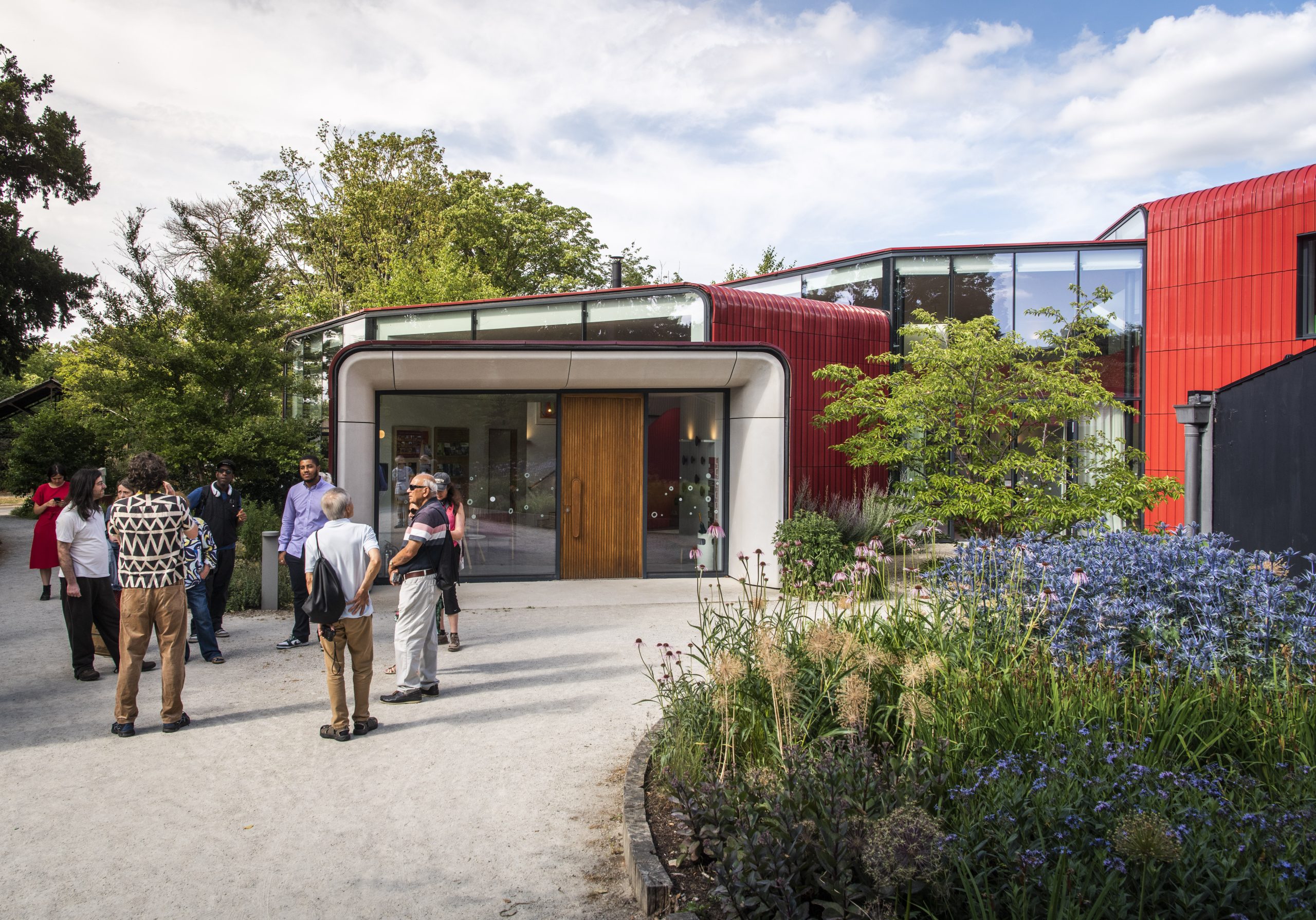
  • A behind-the-scenes look at the design of Maggie’s building with architect Ab Rogers
  • Lab tours inside the Centre for Cancer Drug Discovery at the Institute of Cancer Research
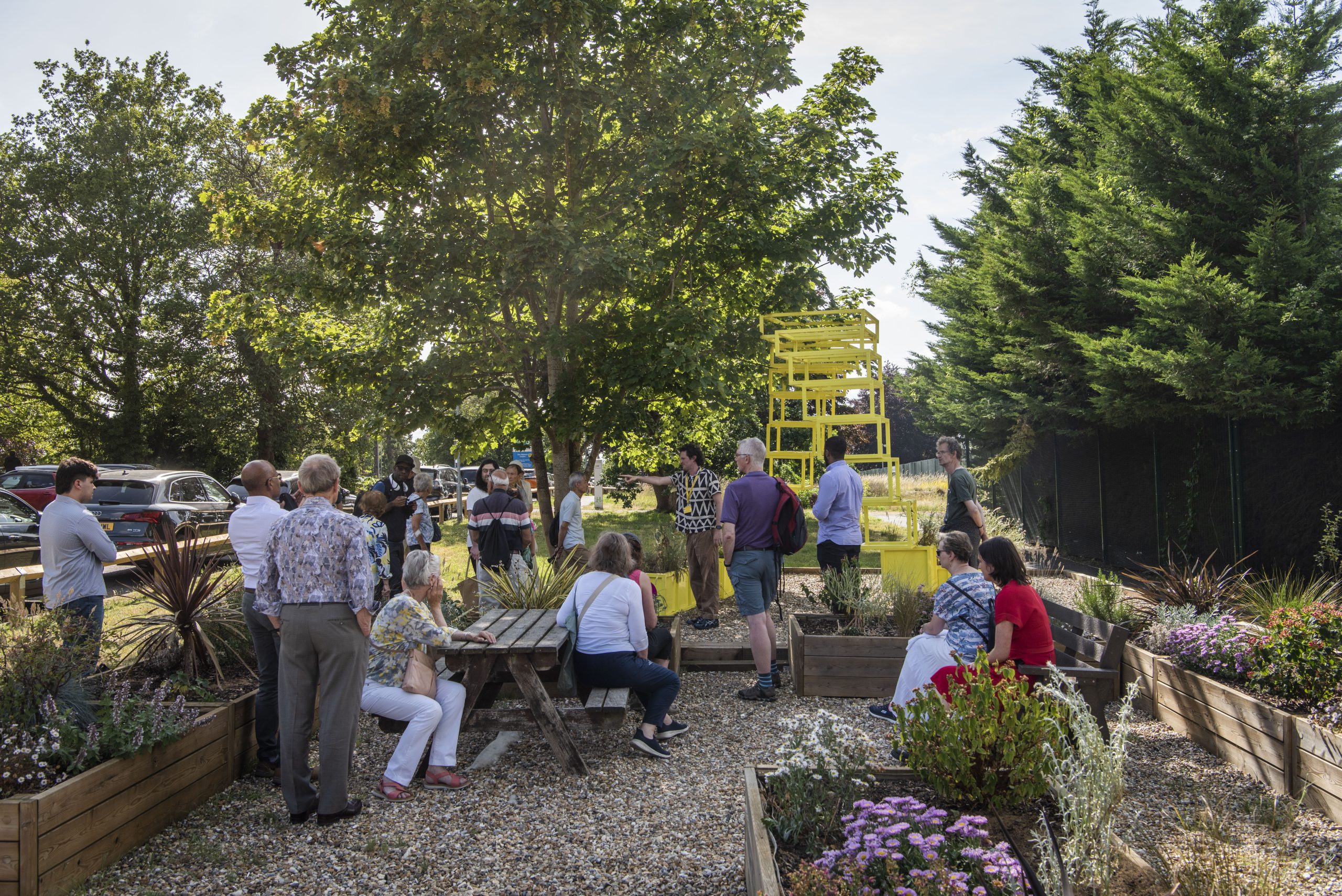
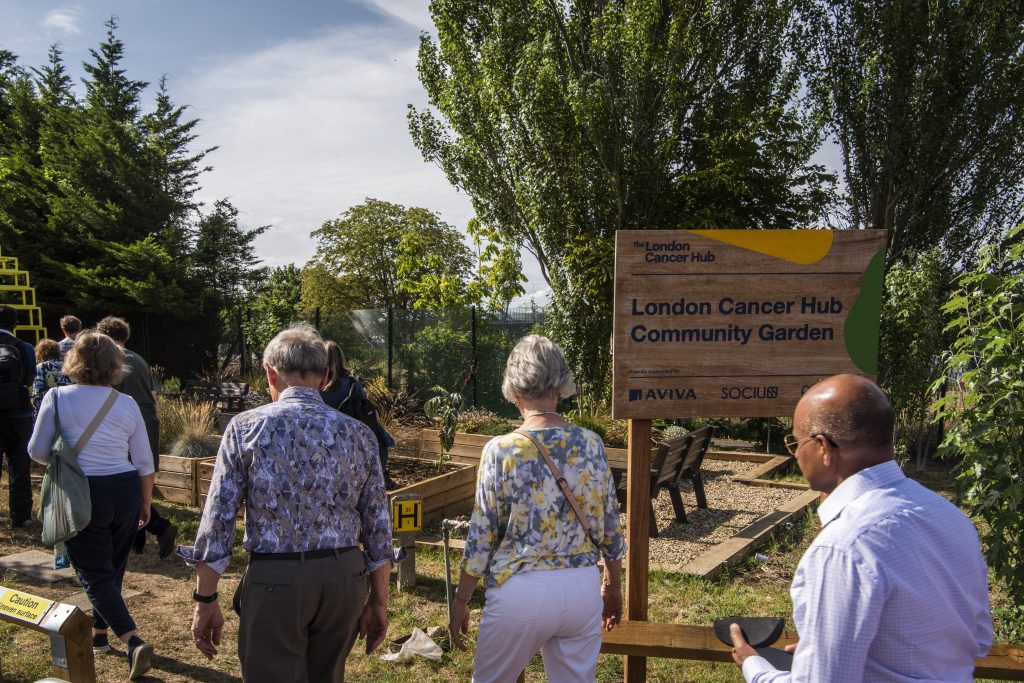
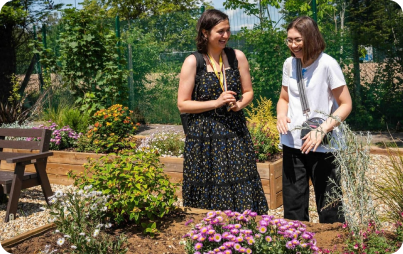
  • A hands-on planting session at the Community Garden, inspired by the Moon Bloom sculpture
  • A flash-mob dance performance of ‘Voices’, a choreographed interpretation of LFA2025’s theme delivered by Sutton Community Dance.

The final event in the programme offered volunteers the chance to leave their mark on the evolving community garden.

As well as provide a tranquil, green area for relaxation for staff, patients and visitors, the space is now home to the striking Moon Bloom sculpture – a collaboration between LFA, London Borough of Sutton, Successful Sutton BID and Adrienne Lau from Edgy Collective, which will serve as a focal point for the garden.

Commenting on the Festival, Councillor Barry Lewis, Leader of Sutton Council, said: “The London Cancer Hub reflects Sutton’s ambition and identity – a place where innovation meets community. This June, we wanted people from across London and beyond to visit and see what’s possible here and be part of shaping its voice and story. We’re really excited to have launched this exciting activity programme for LFA25.”

Olaide Oboh, Managing Director at Populate, added: “The LFA2025 programme brought together all the best of the London Cancer Hub, across science, design and community.

“These events reflect our commitment to inclusive development. Through meaningful engagement and bold placemaking, we’re showing how a forward-thinking built environment can truly improve lives.”

The LFA2025 events also coincided with the launch of BIG Ambition, South London’s strategic vision for growth. London Cancer District featured prominently within the document, seen as a catalyst for job creation, scientific discovery and long-term placemaking.

To provide comments on the live application for London Cancer District (Reference: DM2025/00561), please visit Sutton Council’s planning portal: https://planningregister.sutton.gov.uk/online-applications/applicationDetails.do?activeTab=makeComment&keyVal=SV4P25KC08L00

Photography by Nathan Piccio and Sean Pollock 

London Cancer District developers eye strategy over serendipity, writes Estates Gazette

Evelina Grecenko from Estates Gazette has featured the London Cancer District this week, highlighting its role as a blueprint for future life sciences clusters in the UK. The article explores how the District is creating a globally competitive ecosystem that brings together life sciences companies, The Institute of Cancer Research, and The Royal Marsden to drive innovation, research, and collaboration.

You can read the full article below:

Life sciences is one of the sectors with the greatest growth potential over the next decade, according to the industrial strategy published last week by the UK Department for Business and Trade. Although the government has yet to reveal a bespoke sector plan, the developers behind the London Cancer District have suggested their strategy for the £1 billion  specialist cluster may be reproduced at other sites across the UK.

The London Cancer District has already been named as a leader in cancer research in Europe. It will be the world’s largest cancer life sciences district, once its 12.4-acre expansion, delivered by Aviva Capital Partners and Socius, completes.

Estates Gazette caught up with the stakeholders at the campus to find out how the 10-year plan could help build a globally competitive, self-sustaining, life sciences ecosystem across the country, supporting entrepreneurs to scale and remain in the UK.

A place to start and grow

Last month, outline proposals spanning 974,500 sqft of research and laboratory space, designed by Gensler, were lodged with a move to add critical mass to the campus and help it to cater to innovators from the earliest stages.

The future spaces are expected to build on the success of the Innovation Gateway building, which opened in 2022 offering 6,300 sq ft of incubator space and 3,500 sq ft of labs. It has become home to precision oncology company Curesponse, biotech firm Epistemica, healthtech company Vesynta and anti-cancer targets discovery specialist Vortex Biotech.

The latter recently consolidated its operations to the UK, having closed its facilities in the southern part of the San Francisco Bay Area in the US. The relocation was “a very attractive proposal”, said Paul Reeves, chief executive of Vortex, who told Estates Gazette that “it’s become so expensive over there to be where the action is. In the US, the compound costs on the periphery of the Silicon Valley, ‘and the periphery is still too expensive’, Reeves added.

“If we think about London, we find ourselves within the London Cancer District, on a campus with world-class preclinical and medical institutions, The Royal Marsden Hospital and The Institute for Cancer Research,” Reeves said. “In terms of location, it couldn’t be much better for us. But what we need, and what every life sciences company needs, is high-quality, purpose-built laboratory space – and there’s a shortage of wet lab space in London.”

Vortex was established 12 years ago at the University of California in Los Angeles, but hit its most recent pivot point in 2020, when it was acquired by Net Scientific and EMV Capital. The deal has helped the company to move its technology into commercialisation phase.

Reeves said: “We consider Vortex to still have a startup mentality, because we are on that commercial push right now, but we went through different phases of the business. Sometimes we needed to grow, sometimes we needed to contract, and a lot of life sciences companies face this challenge. Therefore, we’re looking for turnkey solutions so that we can move in and move out without a very long lease making growth or contraction more difficult than it needs to be.”

According to Reeves, lease flexibility is “quite common” in the US, but less so in the UK, with overseas competitors pushing to remove as many obstacles as possible, with involvement at both federal and the state level.

Reeves said: “[At Silicon Valley] it can be as simple as you take a metre of bench space, when you’re at the very early stages, and you can use millions of pounds worth of capex equipment in a core facility which is next door. Then, as you grow, you can take more bench space, or you can have your own dedicated lab. That’s the concept that would make life easier for a life sciences company in the UK.”

Enabling R&D

Through the proposed expansion of London Cancer District, the developers aim to move science occupiers away from the typical co-location model by creating spaces that encourage collaboration.

Olaide Oboh, managing director at Populate, an independently run place management company owned by Socius, told Estates Gazette: “What we really want is an ecosystem where people work together, and find the reasons to be next to one another. The difference between a cluster and an ecosystem is hope – that serendipitously you might all bump into each other and find ways to work. What we want to create is the infrastructure that enables people to collaborate.”

Populate is working with the Institute of Cancer Research and The Royal Marsden Hospital, which sit within the London Cancer District, encouraging them to be more open and allow the existing and future companies on site to use their unique milling rooms as well as get access to clinical trials and tissue culture.

Oboh added: “I think what those institutions have seen is that they can only grow to a limit before they need the private sector to come in and work with them, for them to also grow and thrive.

“We’re running a physical space, Innovation Gateway, we’re managing that building and the tenants, supporting them in their growth ambitions, connecting them with Institute of Cancer Research and The Royal Marsden Hospital, but also with other parts of the science ecosystem across London.”

Driving innovation

Having mixed all the necessary ingredients to create a thriving innovation environment within a single specialist cluster, the next challenge is to make sure they’re interconnected.

Oboh said: “I think there’s not enough collaboration between the major science parts of the UK. We should be talking to one another; we should partner and work together so that we’ve got a united voice about what we think is important.”

Jon Wilkinson, director of business and innovation at the Institute of Cancer Research, added: “We’ve got researchers working in different labs, focused on their own thing, but when they come together new research ideas, collaborations and opportunities come forward. So creating an open, flexible and engaging framework for clinicians to come together with manufacturing people, data people, math-driven people, biologists, is key for the exciting stuff to happen.

“That’s one of the parts that government can do. I think the other bit is if we look at the base of the research we’ve got in the UK, it’s globally competitive but the size of investment through the different stages to grow companies tends to be a bit smaller.”

So far, the UK government has committed to support development of the innovation sectors through increased funding for small- and medium-sized enterprises as well as investment in technology training, engineering, digital and defence skills. The industry is awaiting the bespoke Life Sciences Sector Plan to guide further growth journey through to 2035.