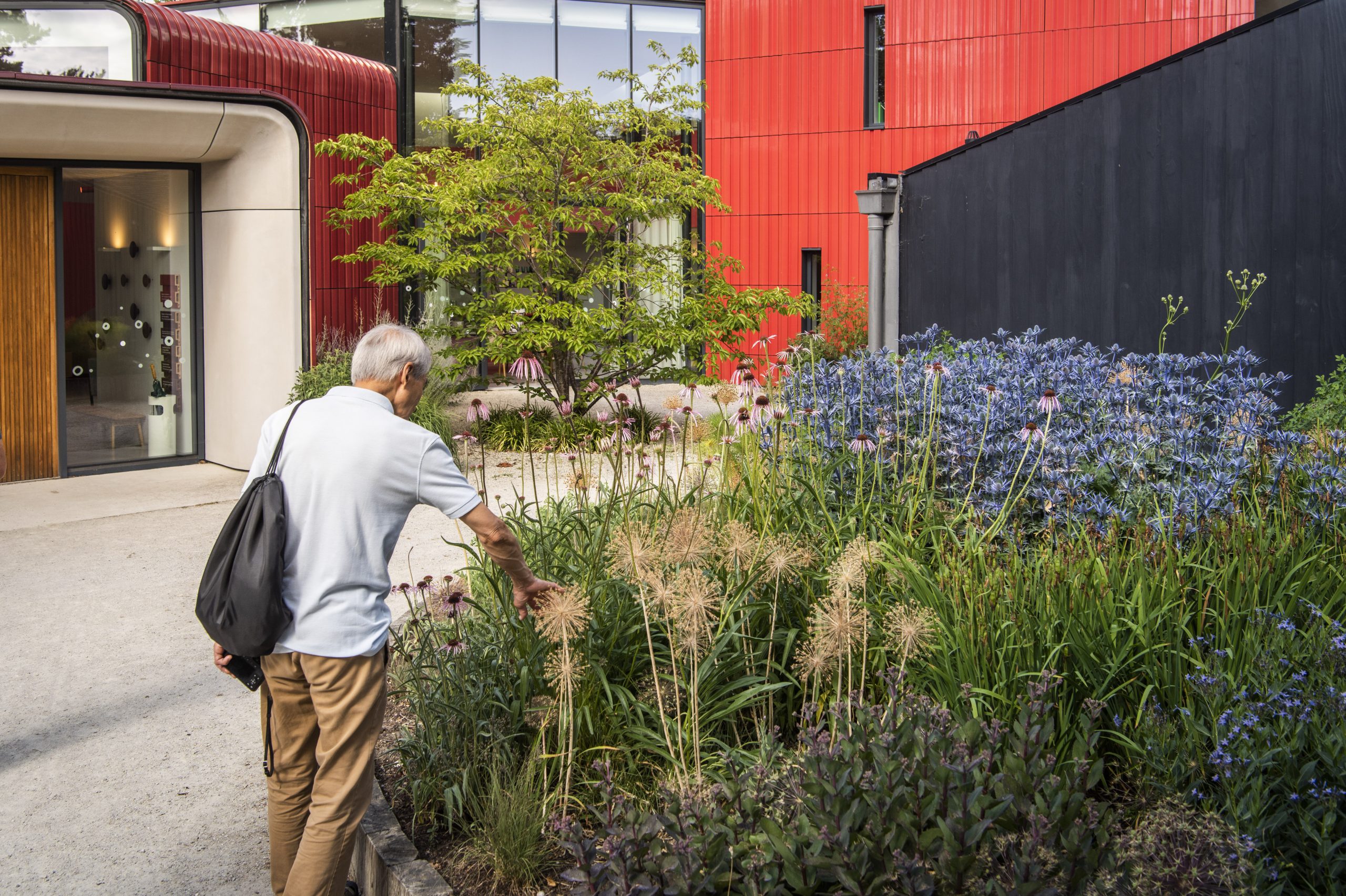
Community gardens, sculptures and green trails offer a glimpse of plans to transform world-leading cancer district.
Aviva Capital Partners and Socius have revealed further details behind the green amenities which will underpin the £1 billion development of the London Cancer District.
Pending planning approval, the recently-submitted masterplan outlines ambitions to create a world-leading centre for cancer research, treatment, education and enterprise in Sutton. The plans also reveal how the development partners hope to place ecology, wellbeing and community at the heart of the project.
In response to community feedback, where 53% of surveyed residents expressed a strong desire for more green spaces, the masterplan prioritises pedestrian-friendly and nature-rich environments, supported by adaptable design of the public realm. These spaces will cater for a range of uses, helping to bring people together, build community cohesion and create a dynamic sense of place.
As a central feature, a 2km green leisure trail, roughly equivalent to six laps around a football pitch, will be delivered. Supporting The Royal Marsden’s Physical Activity Strategy, the trail will wind through vibrant public squares and green corridors, encouraging physical activity and offering peaceful spaces for visitors, locals and patients to rest and recover.
In a commitment to the future of the District’s green infrastructure, the masterplan also includes a robust management framework which will ensure biodiversity and landscape features are maintained and monitored for at least 30 years.

Subject to planning permission being granted, the development will see:
- More native trees – 167 new trees will be planted across the site, the majority of which will be native and chosen for their ability to support biodiversity and improve air quality. This will help to increase the proportion of native trees across the site from 12% to nearly a third.
- Greener connections created – The scheme will incorporate a mix of new habitats, including native hedgerows, wildflower meadows, biodiverse green roofs and living walls. The length of hedgerows will more than triple to improve ecological corridors.
- Biodiversity supported in and around the Borough – New habitats within the development will include more spaces for pollinators like bees and butterflies, native woodlands, amphibian and aquatic environments. In partnership with organisations such as Nattergal, the plans will also deliver off-site improvements to restore woodland and wildflower habitats in the London Borough of Sutton and surrounding areas. The combination of the off- and on-site improvements will result in a minimum 10% biodiversity net gain.
- Sustainability prioritised – Following the Mayor of London’s Be Lean, Be Clean, Be Green, and Be Seen energy hierarchy, the Cancer Hub will incorporate fully-electric systems powered by air-source heat pumps, photovoltaic panels and future-proofed to connect to a district heating network if one comes forward. The overall energy strategy aims to deliver a 33% reduction in regulated carbon emissions, with a £1.5 million carbon offset to support local sustainability initiatives.
More immediate placemaking improvements to the site will come forward in the coming months, ahead of the planning determination. This includes the recently approved plans to create a four-court padel facility, which is due for completion this summer.
In celebration of The London Festival of Architecture in June, the development team have also hosted a series of events and relocated the Moon Bloom sculpture from Sutton’s high street. The sculpture will take pride of place within a newly established community garden on-site at The Institute of Cancer Research and The Royal Marsden NHS Foundation Trust, which was recently transformed by Socius into a tranquil and welcoming space.
In order to serve a future Specialist Emergency Care Hospital with a road connection that is fit for expected demand, the LCH planning application proposes the relocation of some allotments close to the west site boundary onto the London Cancer District site.
A commitment has been made to re-provide land to accommodate all the displaced allotments on the other side of Cotswold Road on a like-for-like basis, which will be ready for use before any existing plots are disturbed.
Daniel May, Director at Socius, said: “Integrating greenery and nature into our surroundings has a proven benefit of reducing stress, improving mental well-being and aiding recovery. We want to bring that to life here in Sutton, in spaces where people can thrive, whether they’re residents, patients, visitors or employees.”
Joss Taylor is Head of Activation at Populate, a company founded by Socius, which helps investors maximise the potential and social value from their buildings and spaces.
Commenting on London Cancer Hub’s meanwhile use, Joss reflects: “Populate was created to help unlock long-term social and economic value, and it’s been great to make a start on that ambition here in Sutton. As we’ve seen in the new community garden, the Moon Bloom sculpture and plans for temporary padel courts, our early activations have sought to create meaningful, welcoming spaces for everyone.”
The London Cancer District is targeting BREEAM Excellent ratings across all phases and an Urban Greening Factor of 0.48, well above the policy target of 0.3. The design includes passive energy measures, smart building management, and flood and overheating resilience.